CarExpert Choice Awards trophy
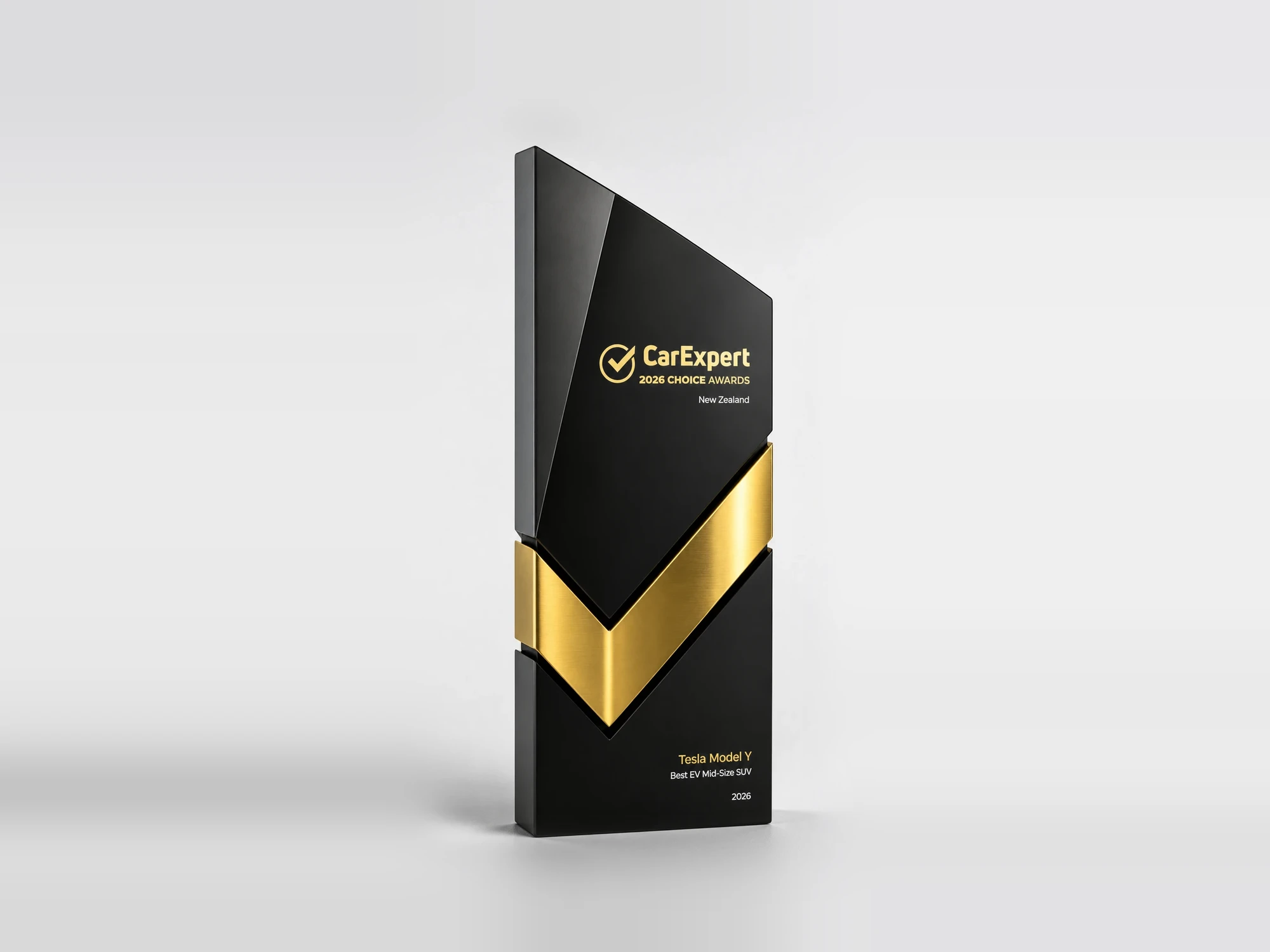
A solid metal trophy for the brands that win a CarExpert Choice Award, handed to car makers in Australia and New Zealand.
- Role
- Designer
- Client
- CarExpert
- Year
- 2026
- With
- Illustrator, Blender, Claude, AI image generation
Winning a CarExpert Choice Award gets a car a badge on the site. That’s useful, but nobody at the car company can put a badge in reception. For 2026 we wanted something we could hand over in person, that a brand would actually want to keep. The brief I got was, more or less, “come up with a cool trophy design”.
The first versions had too much going on
The Choice Awards logo is a tick in a circle, so that’s where I started. The early concepts used both: a ring around the top, a big gold tick breaking out of it, a printed column underneath, a stepped base, a plate for the category. Everything in the logo ended up on the trophy somewhere.
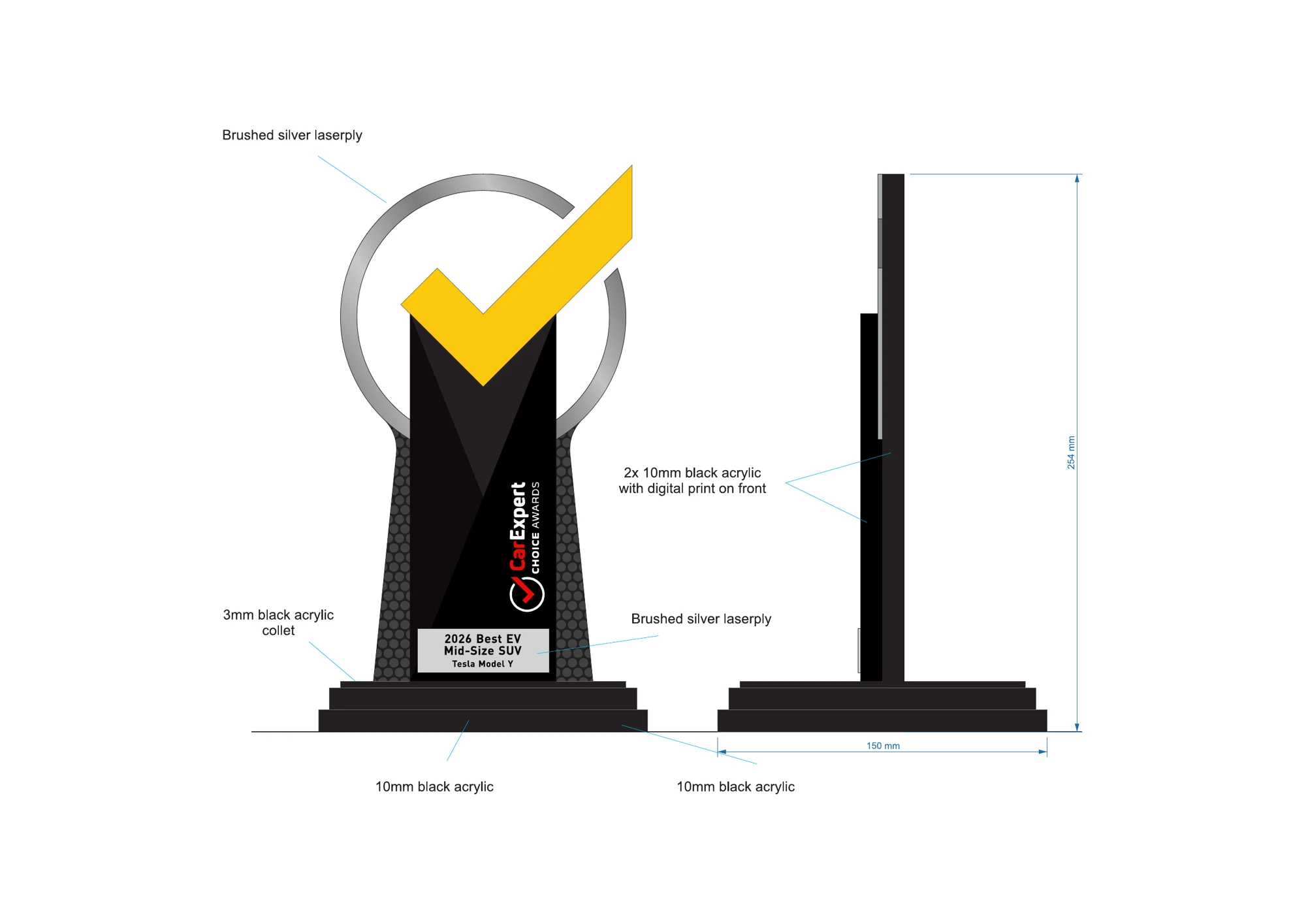
It looked fine on paper. Once we had samples made, it looked busy, and a bit like every other trophy. The ring was fragile, the layered acrylic felt light in the hand, and there were too many materials fighting each other.
Taking things away
Each round after that was mostly about removing something. The ring went first. Then the plate, then the extra layers in the base. The tick stopped being a separate piece on top and became a gold band running across the face, as if the trophy itself had been ticked.
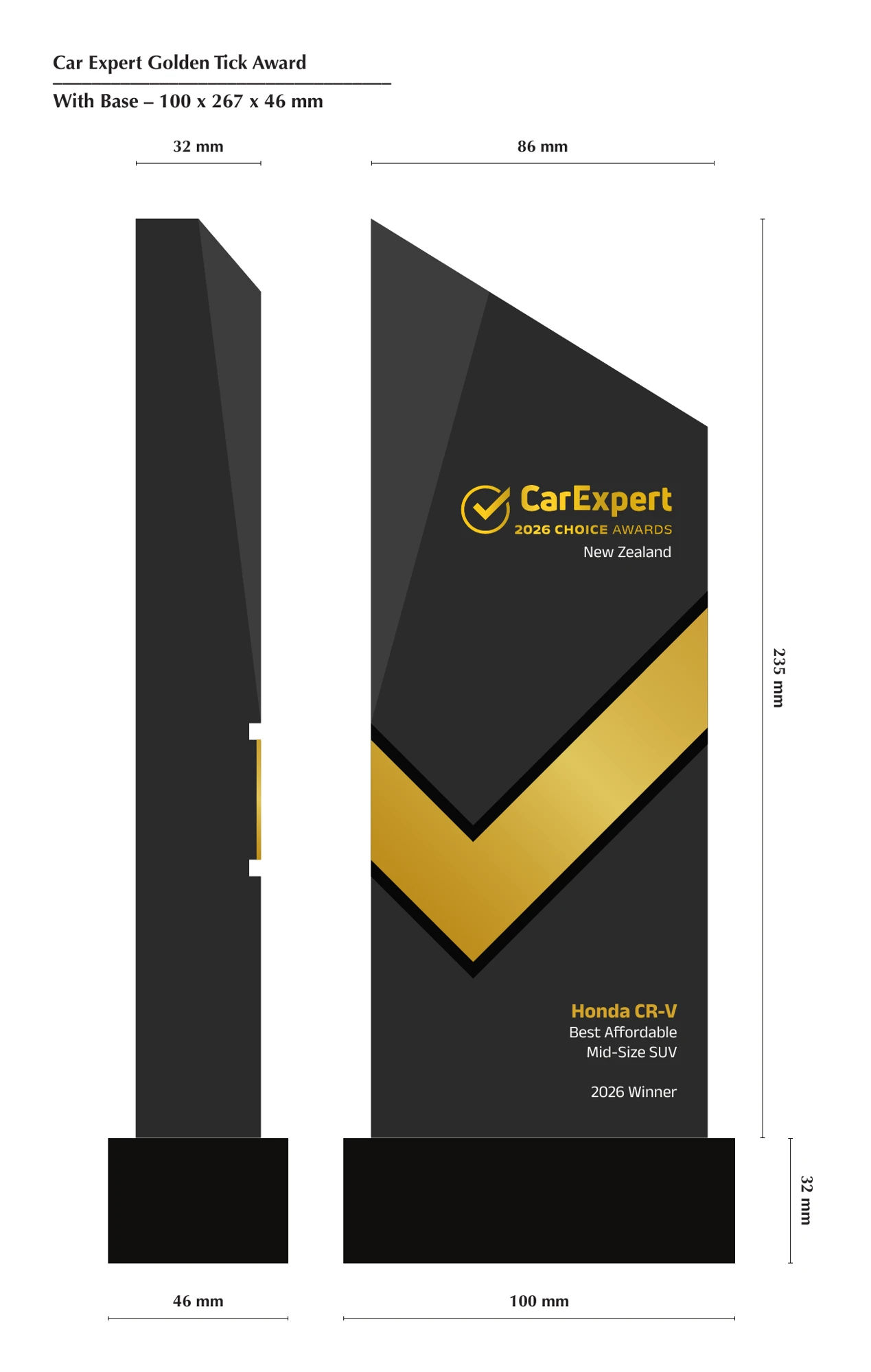
By the end it was a single black block with an angled top, the gold tick, and the text. The logo, the market and the winning car all sit on the face, so every trophy is the same object and only the words change.
Getting sign-off on something nobody had held
Flat drawings were a hard sell. They don’t show how heavy it is, or what the gold looks like when light hits it, and most people struggle to picture an object from a front and side view.
So I tried AI image generation. This was early days for it, and with basic prompts the results were questionable. The geometry was wildly unrealistic, and it went way overboard on some of the features: extra facets, exaggerated angles, details that could never be achieved.
What worked was giving it my flat front view of the design and asking it to render that. It stuck to the shape and proportions I’d drawn, and filled in what the drawing couldn’t: the matte black, the brushed gold, the way light falls across the angled top.
From there I moved into Blender with Claude, building the trophy as a 3D model so I could spin it around, try the proportions and show people every side before we paid for another sample.
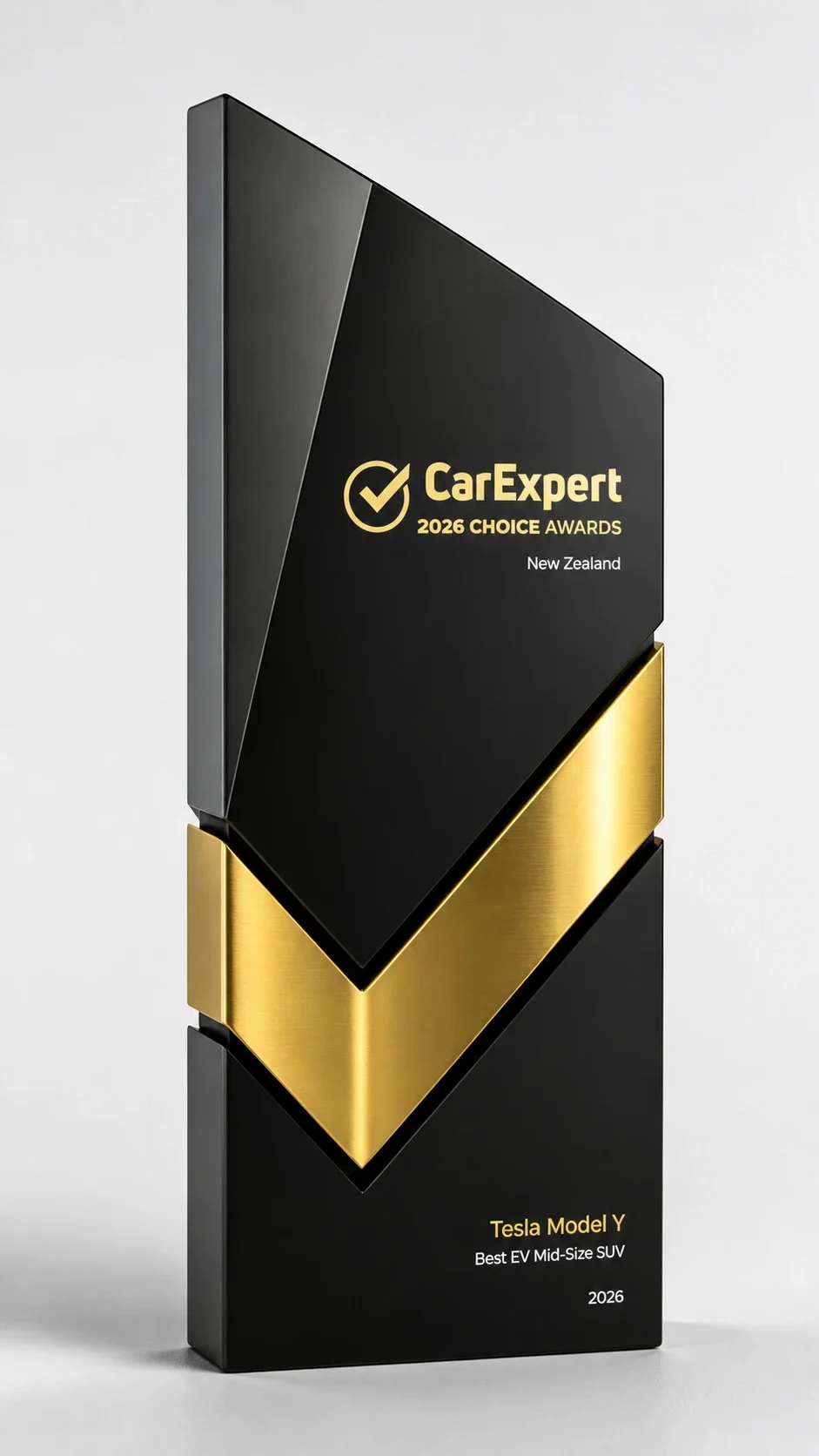
It meant people were giving feedback on something that looked real, and we spent the samples on the questions only a physical object could answer.
The plinth
What we ended up with is a solid metal plinth, and it’s heavy. You notice the weight the moment you pick it up, and that did more for the “premium” feel than any of the details we took out.
Handing them out
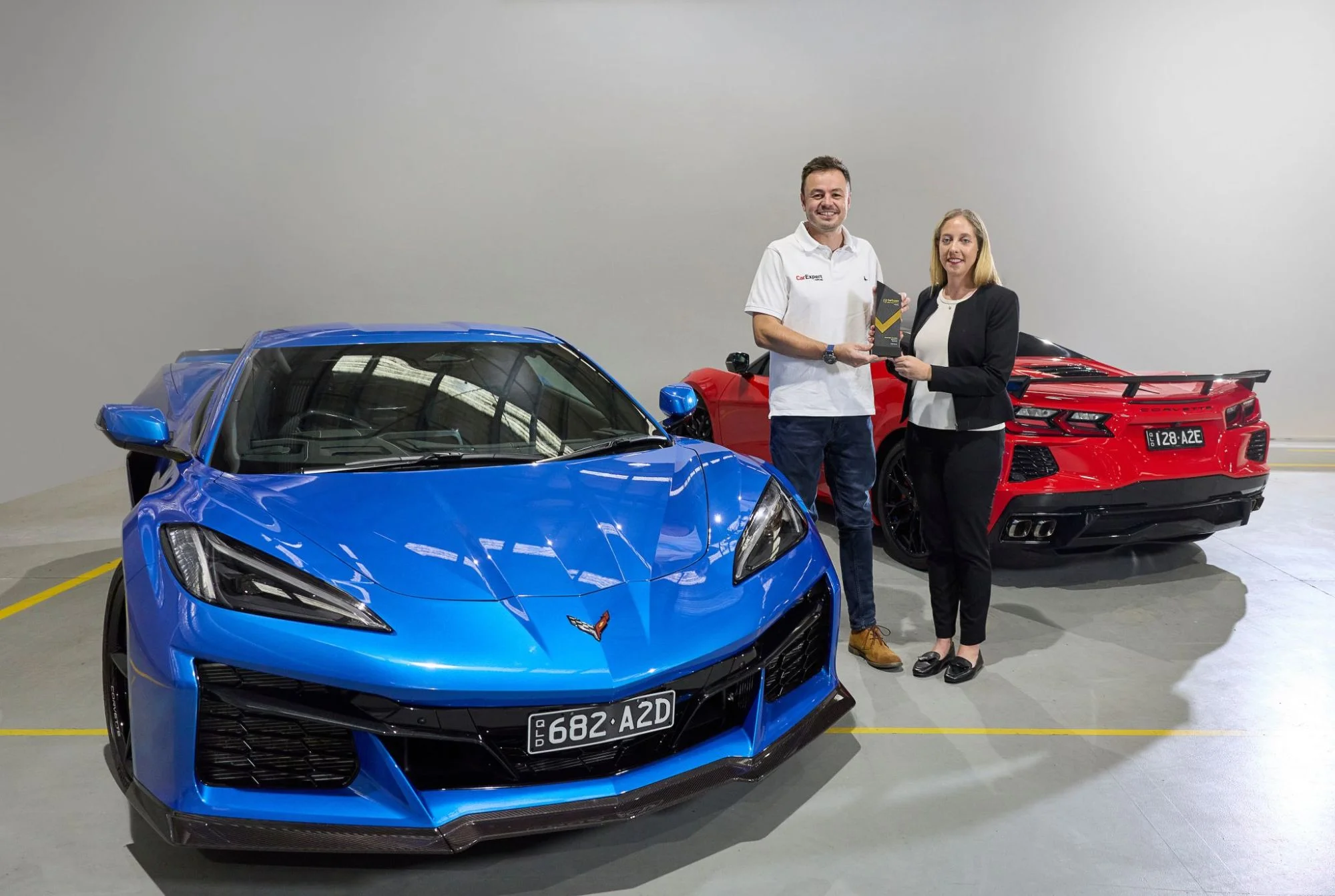
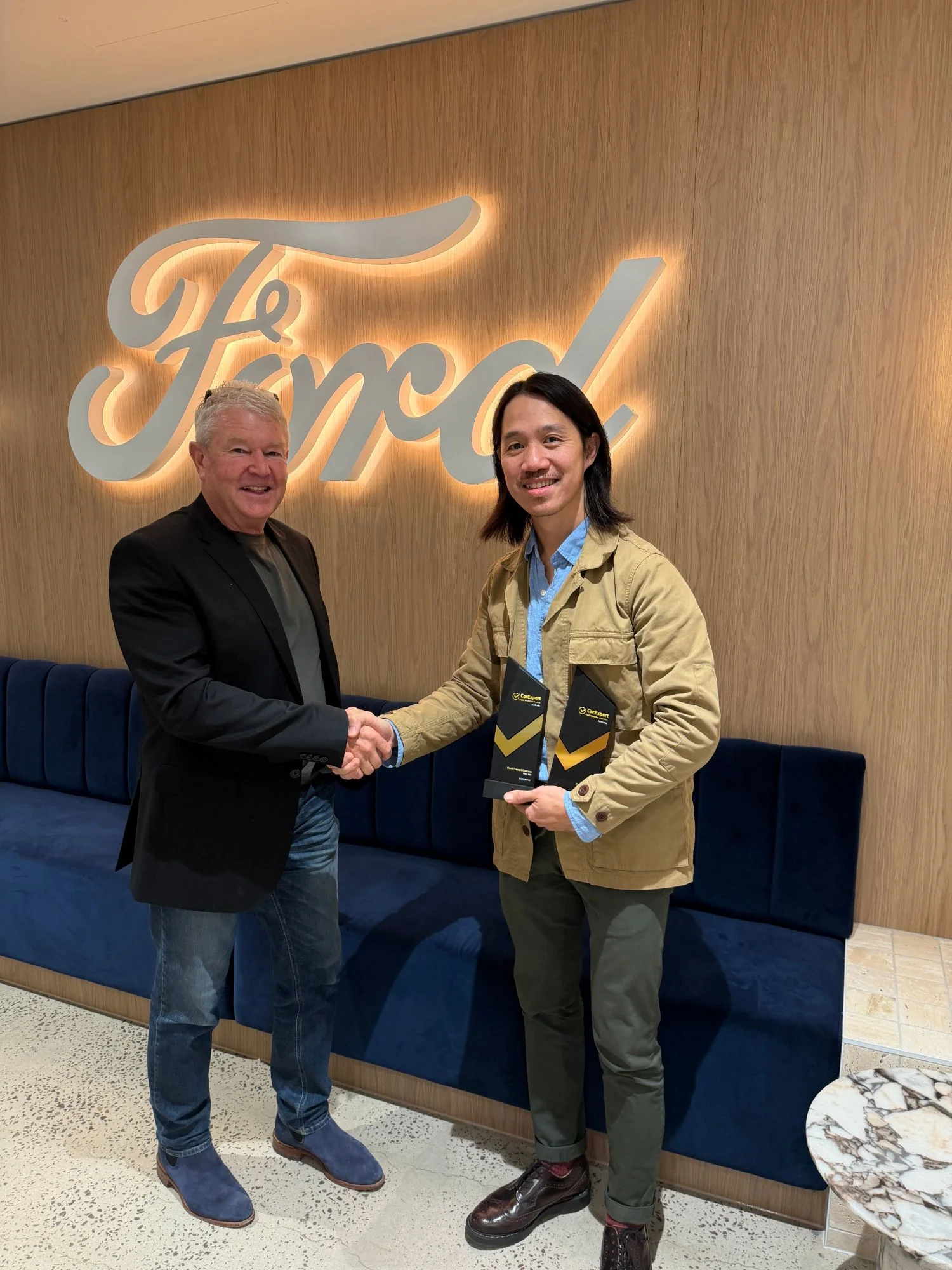
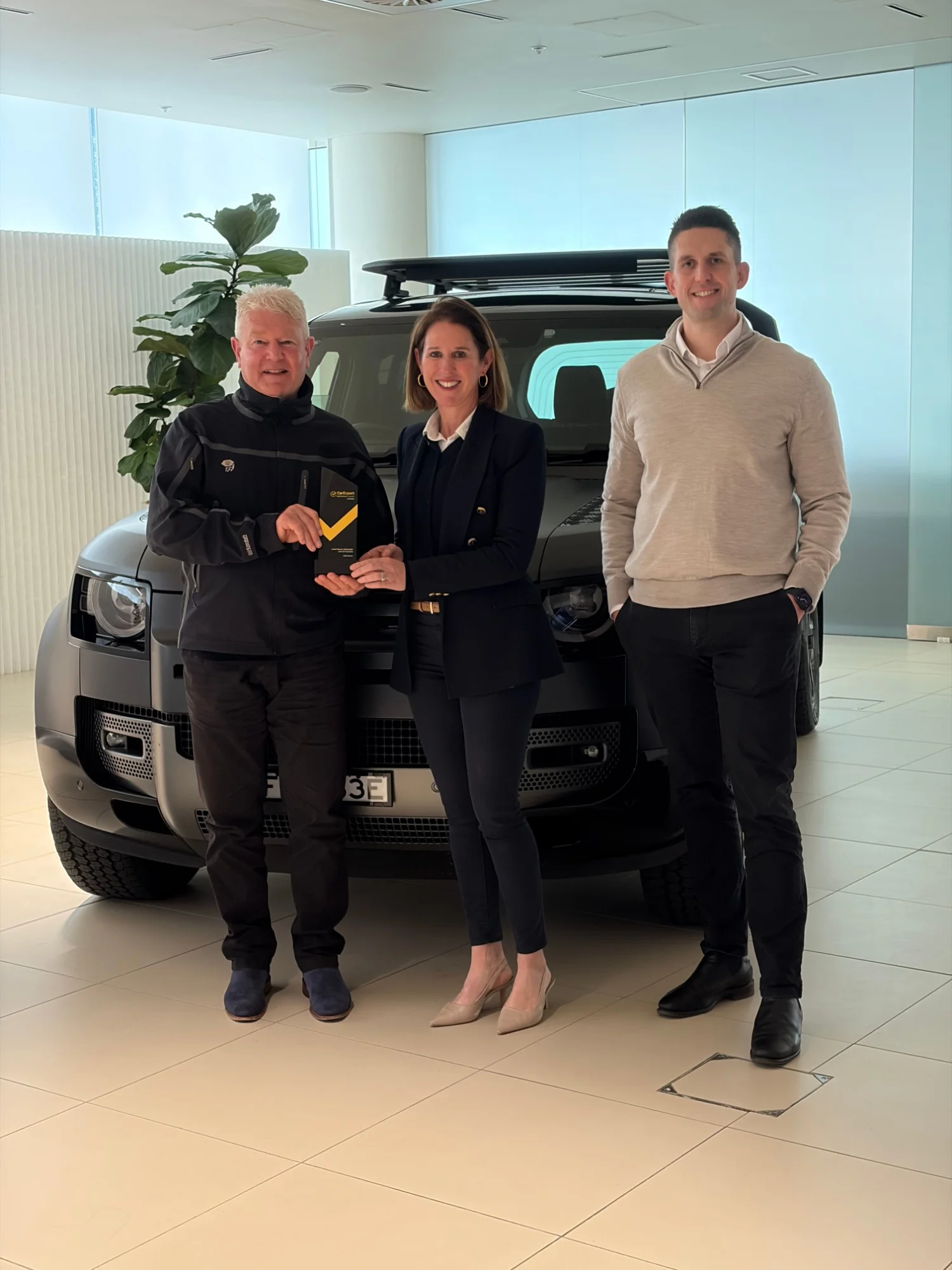
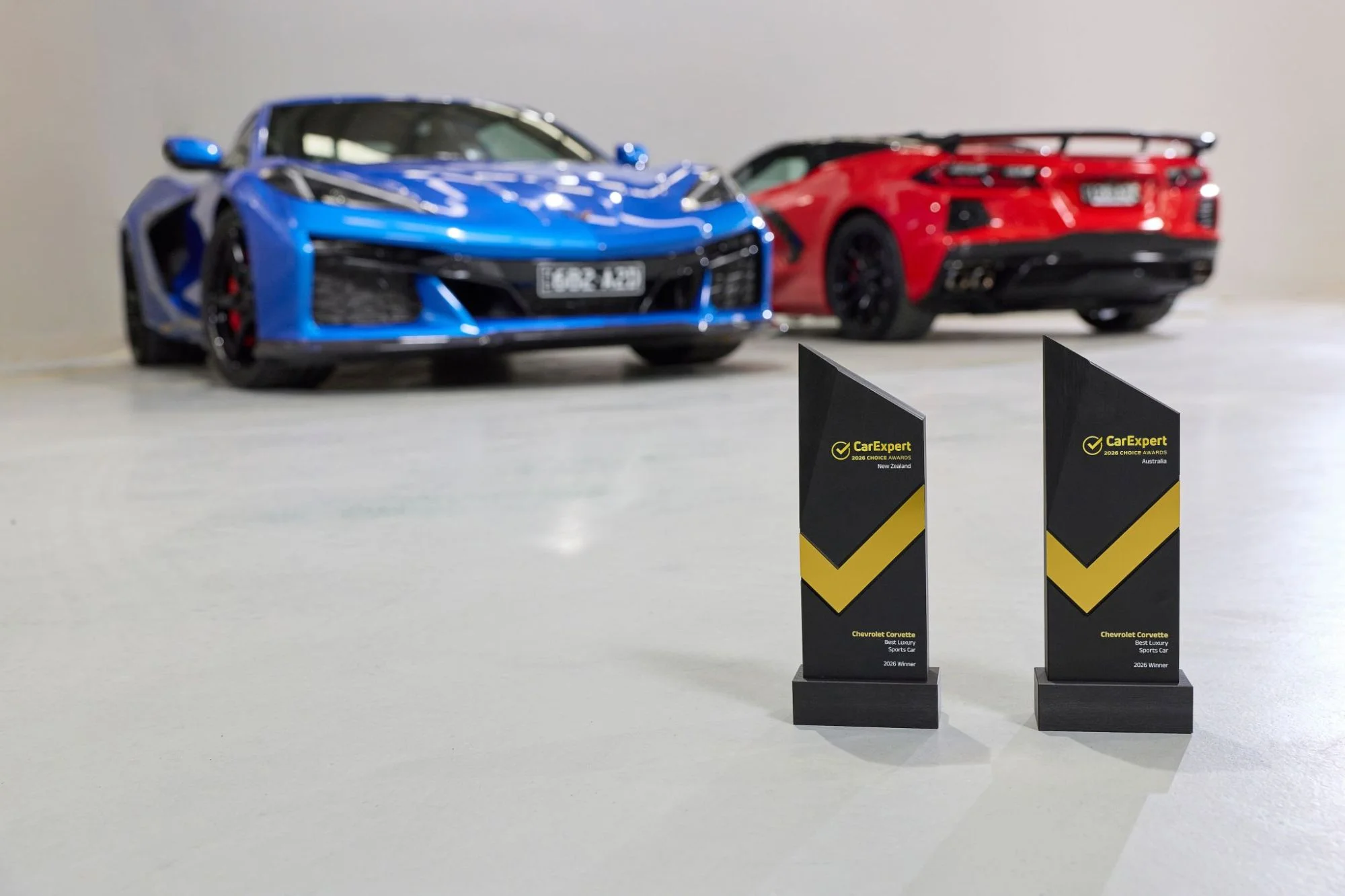
We handed the trophies to the winning car makers in Australia and New Zealand.