Align
A little tool for couples to rank what matters to them, then see where they line up and what’s worth talking about.
- Year
- 2026
- For
- Two people
- Saved
- Nowhere but the link
Planning anything big as a couple tends to start with a vague conversation. You both care about a home, money, family, time together, work. The trouble is you rarely say out loud which of those comes first, so you end up agreeing in general and disagreeing in the details.
Align is a small way to get those details on the table. One of you starts it, adds a few priorities and sends a link. The other adds theirs. Then you each rank the full list on your own, without seeing the other’s order, and it shows you where you already agree and where you’re furthest apart.
The order matters. You each think it through on your own before you talk, so neither of you is nudged by what the other wants. Then you sit down together with two honest answers instead of one and a polite nod.
A conversation, not a form
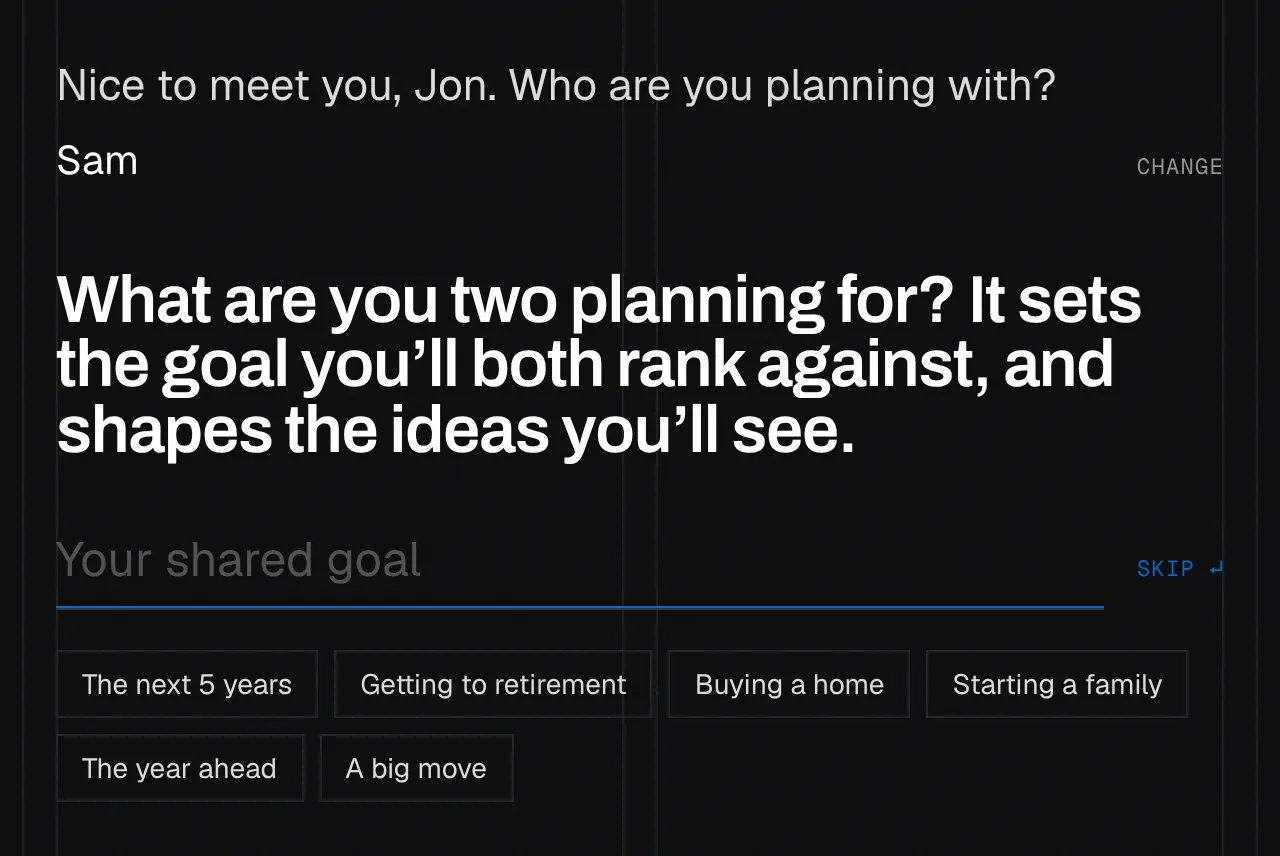
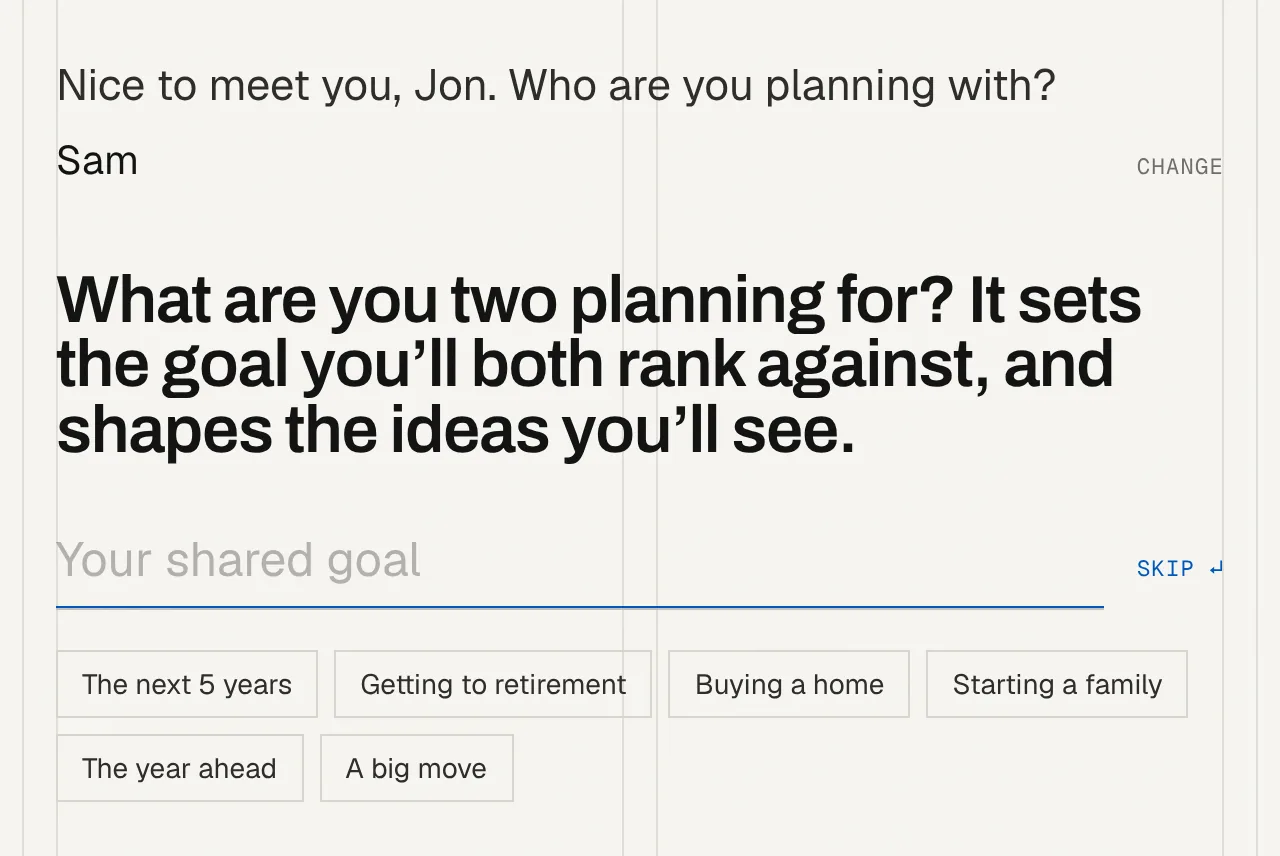
The first version was a page of fields. It worked, but it felt like admin. Watching someone try it for the first time, the starting list was the confusing part: it wasn’t clear which bits were theirs to change. So now it talks you through one question at a time, says whose list is whose, and lets you either type priorities one by one or just brain dump and have them pulled out for you to check.
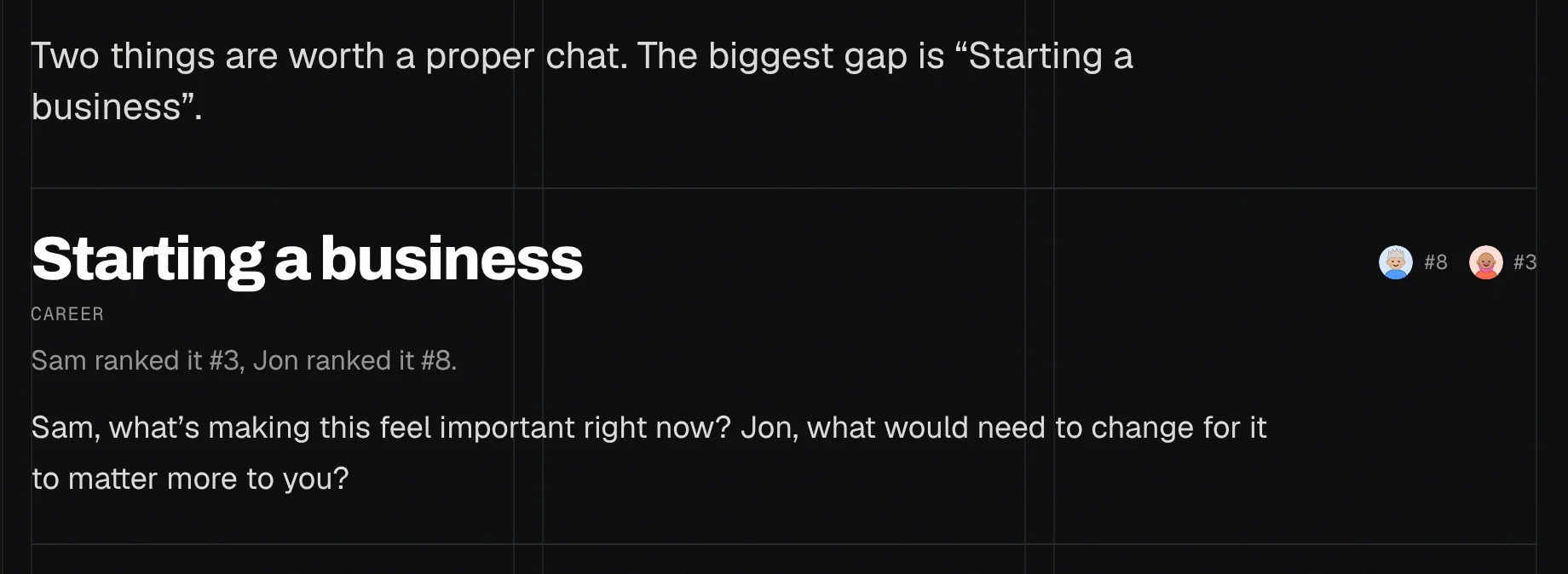
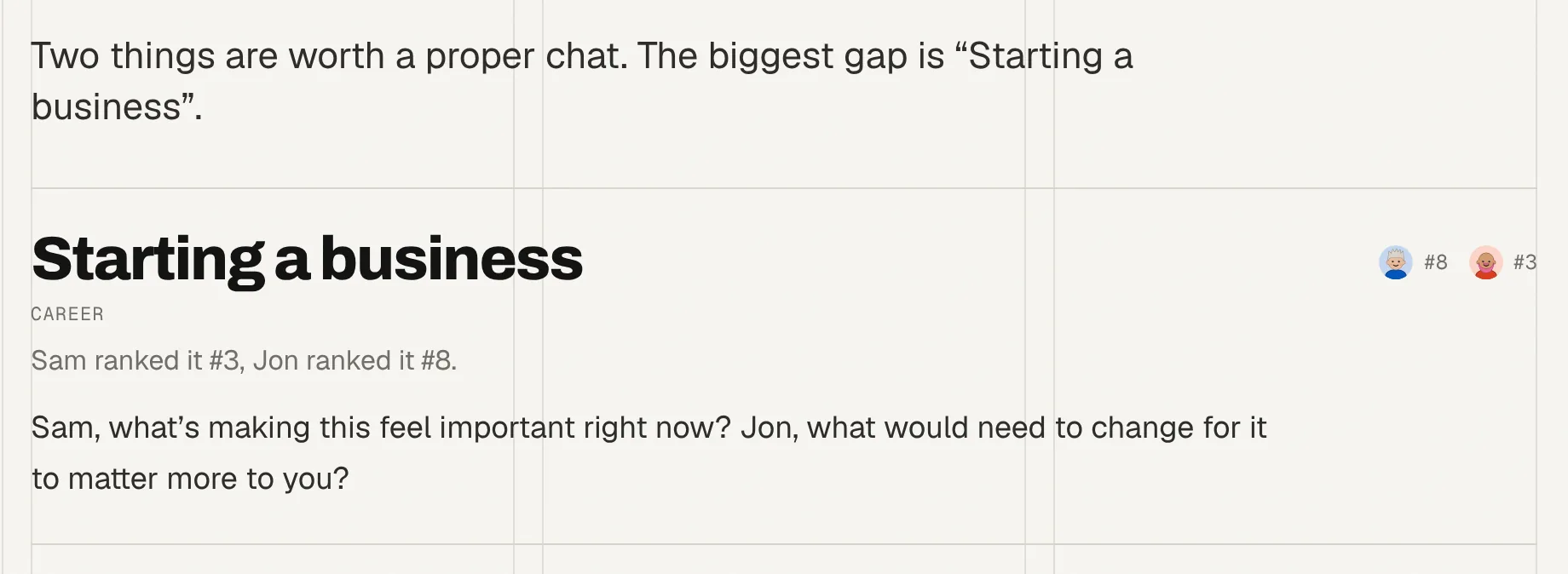
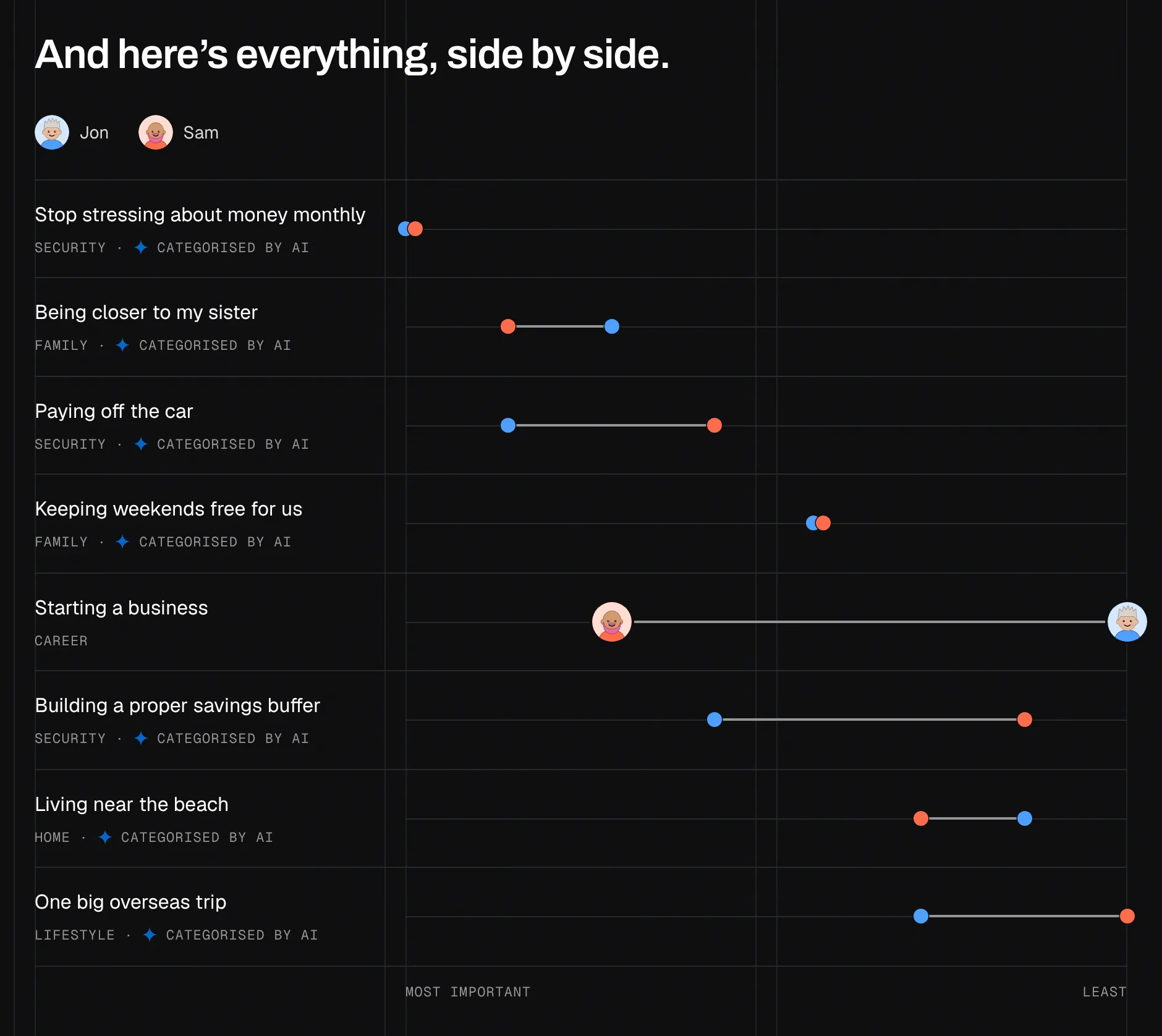
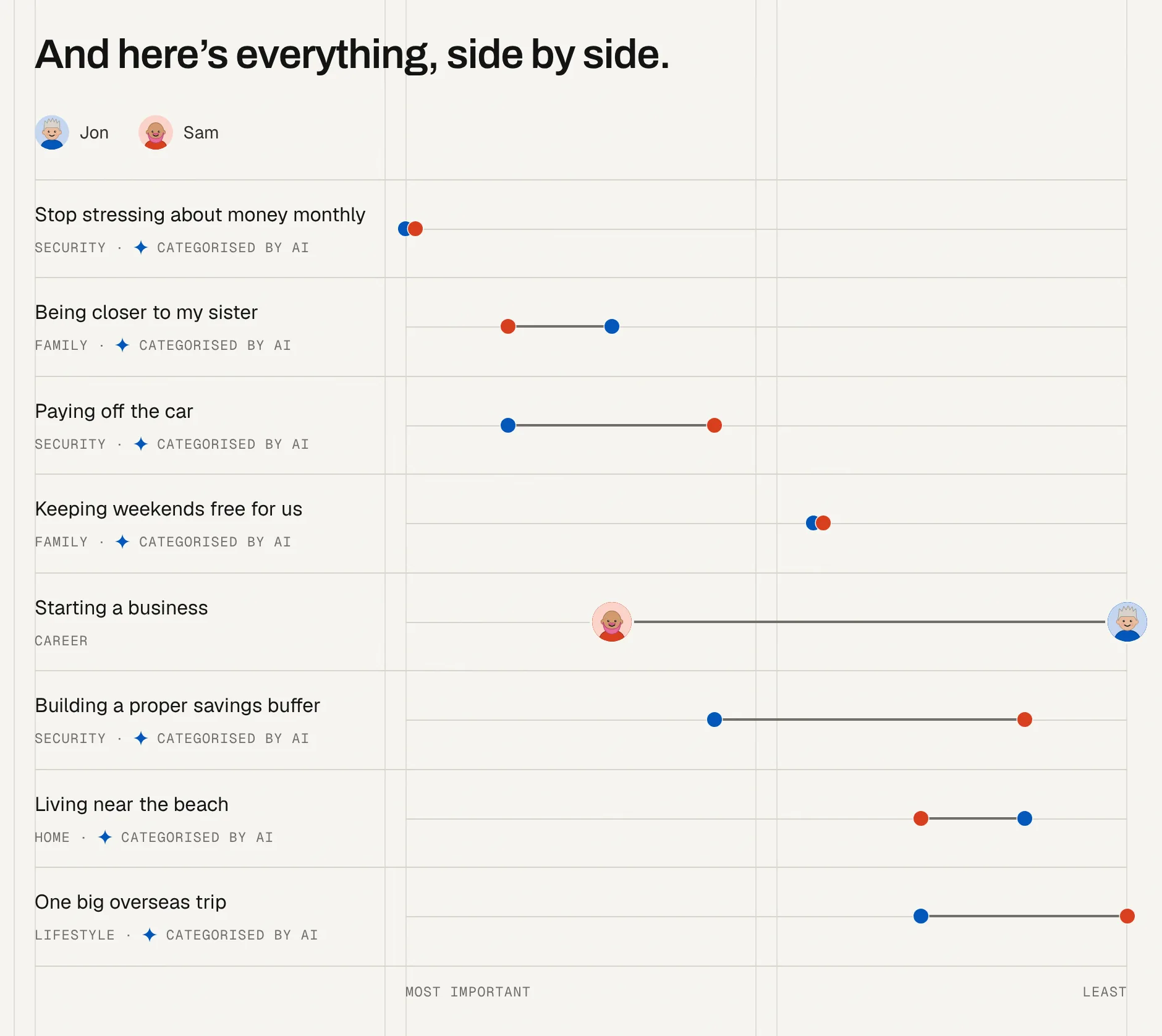
The results work the same way. They’re revealed one finding at a time: what you share most, where you agree, the biggest gaps, and which areas of life each of you leans towards. Each gap comes with a question to start the conversation, because that’s the whole point. It’s not a score to win, and nothing in it is set in stone.
Where AI helps, and where it doesn’t
There’s a little AI in it, kept to the boring jobs. It runs through OpenRouter, which made it easy to pick a different model for each job rather than one model for everything.
Sorting priorities with Jev
When you lock in your ranking, anything you typed yourself gets sorted into an area of life: Home, Family, Lifestyle, Security, Career or Other. That’s done by Jev, a decision model from TypeSafe. Instead of writing an answer, it’s asked a typed question (which of these six areas is this about?) with a short definition of each, and it returns one of the options with how sure it is. There’s nothing to parse and nothing to go off-script. Each priority is its own small question, so they all run at once, and only the priority’s text is sent. The built-in suggestions already know their category, and if Jev can’t answer in time, the priority just says it wasn’t categorised rather than guessing.
Brain dumps and ideas with Claude Haiku
The two jobs that need actual writing go to Claude Haiku, a small, fast model. One turns a brain dump, typed or spoken, into a short list of priorities. It’s told to keep your words and your voice (“my sister”, not “her sister”), merge anything that says the same thing and skip what’s already on your list. Nothing is added until you’ve checked it.
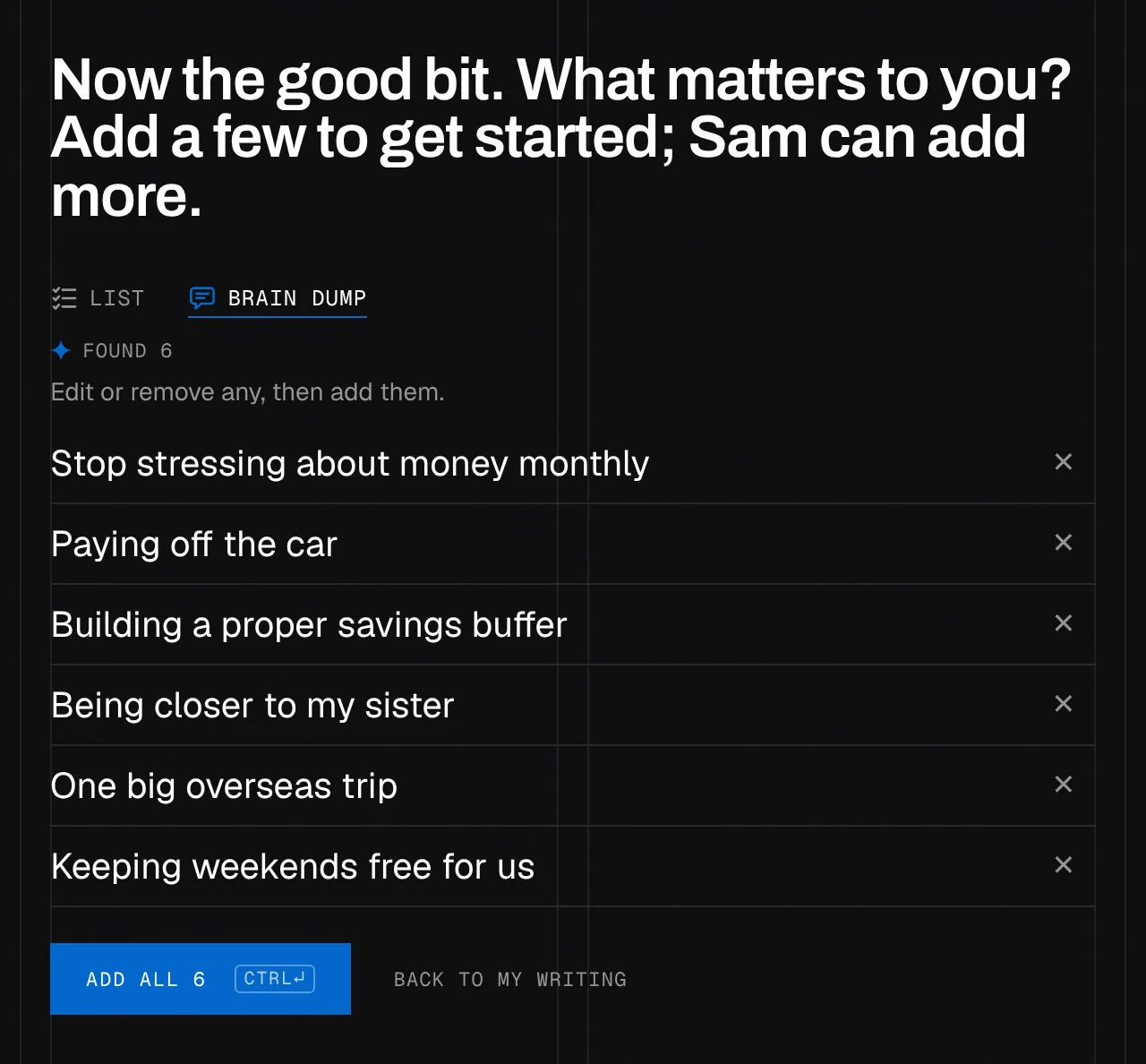
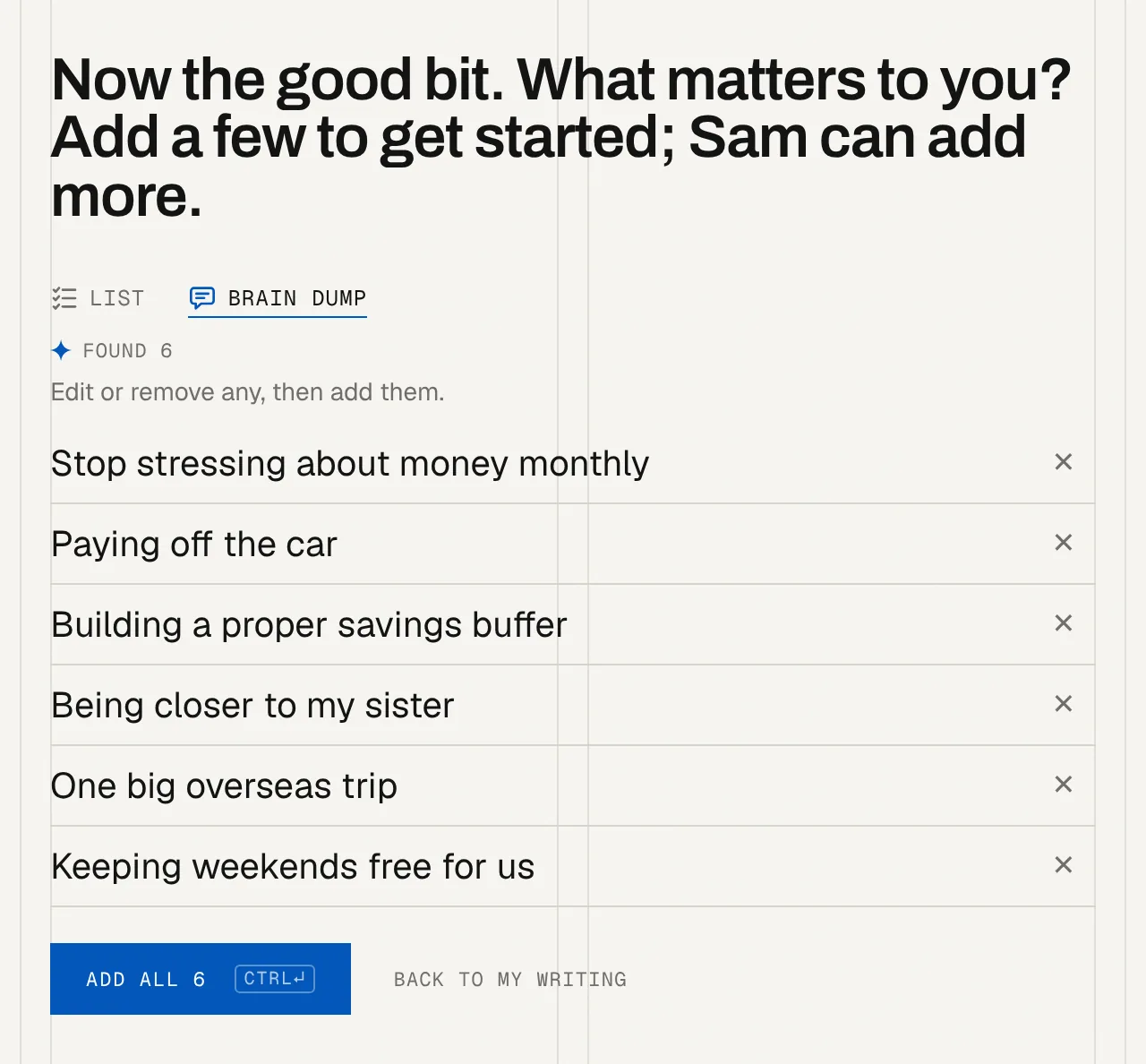
The other suggests ideas that fit what you’re planning for. Once you’ve said what the plan is, “Getting to retirement” say, it quietly asks for a dozen ideas spread across the areas of life while you carry on, so they’re ready by the time you need them. Both ask for structured answers in a fixed shape, and both have the model’s extra thinking switched off: these are quick jobs, and it only made them slower.
The results are just maths
The findings themselves don’t use a model at all. The score compares your two orders, the gaps are where your ranks are furthest apart, and every line in the results is worked out from those. It’s quicker, it can’t make anything up, and I didn’t want a model telling anyone what their relationship means.
Something to keep
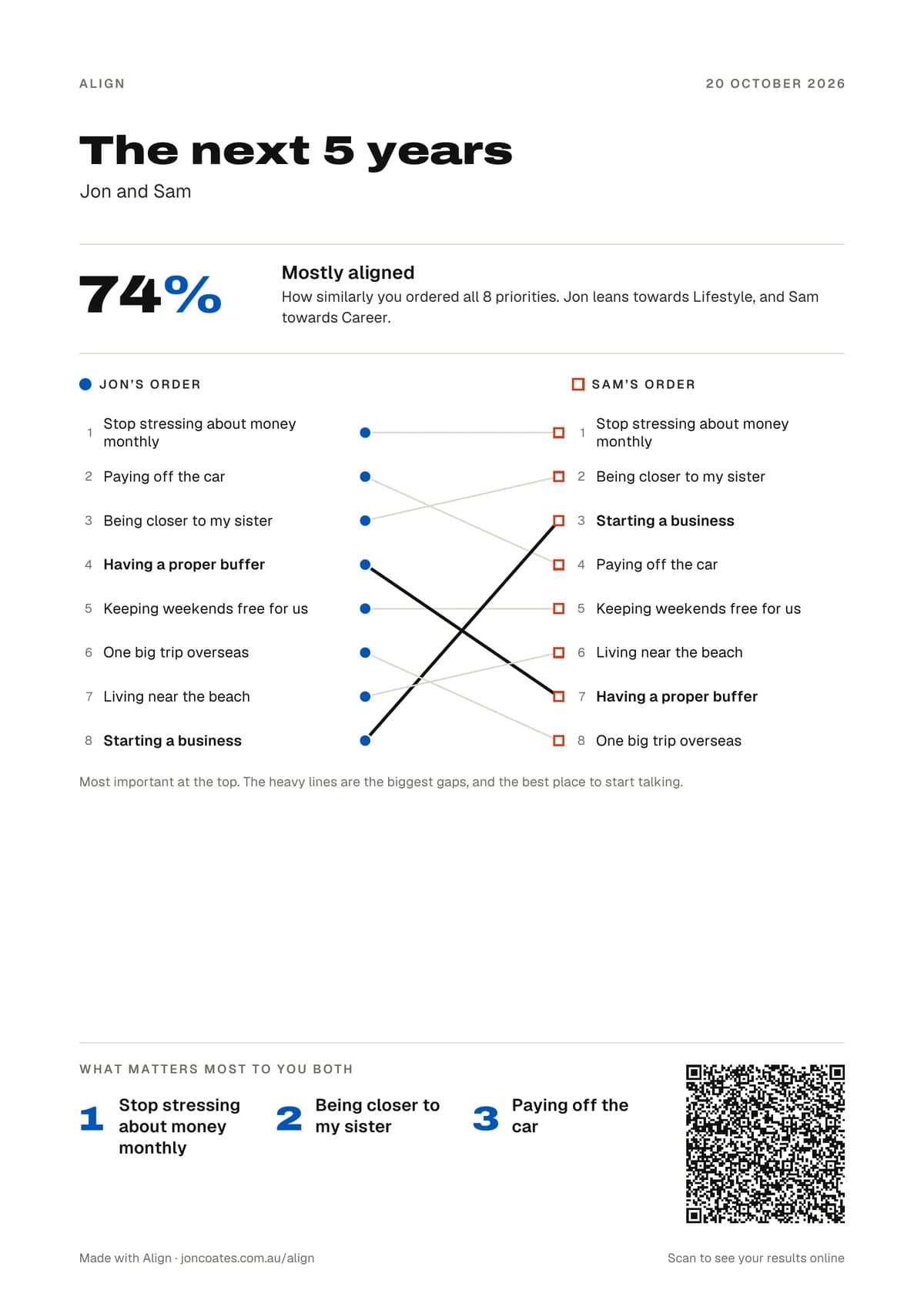
The results end with a PDF to download. The first version copied the screen onto paper, finding by finding, and read like a printed web page. Paper is better at showing everything at once, so the PDF is now a single page built around one chart: each of your orders as a list, with a line joining each priority. Flat lines are things you agree on, and the steep, heavy ones are the gaps. You each get a shape as well as a colour, so it still works from a black and white printer.
A QR code in the corner opens the full results again. Like the share link, it carries the whole plan, so the PDF is made in your browser and nothing is stored anywhere.
Private by default
There are no accounts and no database. Everything you enter lives in the link itself, compressed into the part of the address that never gets sent to a server. The only things that leave your browser are what the AI needs to see, like a priority being sorted or a brain dump being tidied up. Analytics are switched off on the tool, too. If you lose the link, it’s gone.